Spray, spread and map
Agricultural spray drones for East African farms
Spray crops, spread seed and fertilizer, and map fields with DJI Agras and XAG drones, imported, assembled, registered and supported by Qube Qraft in Kenya, Uganda, Tanzania, Rwanda and Ethiopia.
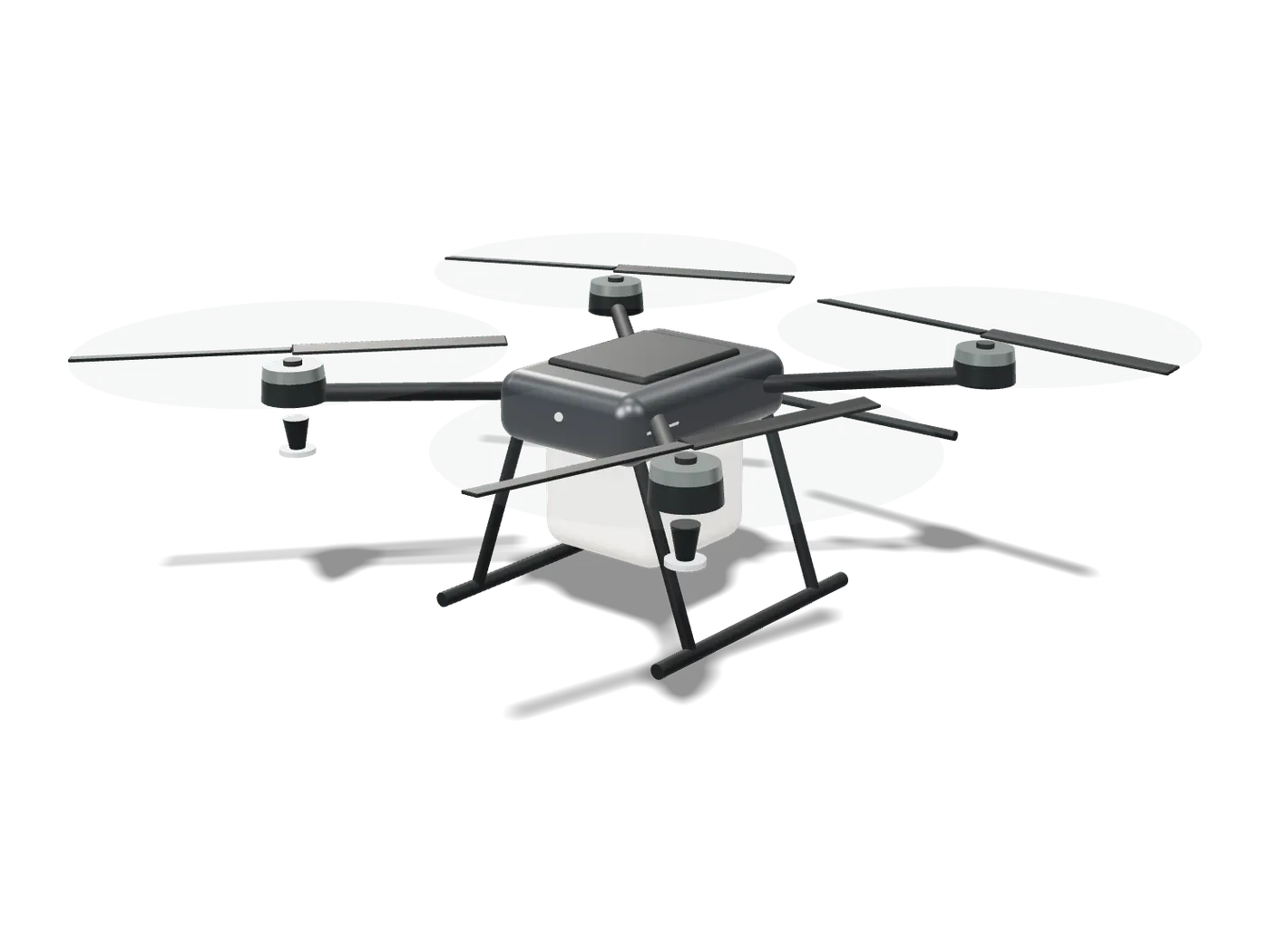
What is the best agricultural drone for farms in East Africa?
For small and mid-size farms, the DJI Agras T25P is the practical first choice: a 20 L spray tank, 25 kg spreading payload and a foldable body one person can run. Large estates and plantations get more done per day with the DJI Agras T70P (70 L), Agras T100 (100 L) or XAG P150 (70 kg payload).
Models we import
Agricultural drones compared
Manufacturer figures, measured in ideal conditions. Prices on request, including import permit, duties and delivery.
| Model | Maker | Spray tank | Spreading | Also | Best for |
|---|---|---|---|---|---|
| Agras T25P | DJI Agriculture | 20 L (20 kg) | 25 kg | Foldable, one-person | Small and mid-size farms |
| Agras T70P | DJI Agriculture | 70 L | 100 L | 65 kg lifting | Estates and cooperatives |
| Agras T100 | DJI Agriculture | 100 L | 150 L | 80 kg lifting | Plantations, large fields |
| P150 | XAG | 70 kg max payload | Supported | 30 L/min flow, 18 m/s | Large farms, mapping too |
Why it works
Why East African farms use spray drones
- 01Steep and terraced landDrones fly over tea, coffee and hillside farms where tractors and boom sprayers cannot go.
- 02Less contact with chemicalsWorkers mix and load, the drone sprays. Fewer people walking through treated crops with knapsack sprayers.
- 03No crop damage from wheelsSpraying from the air means no tracks through maize, sugarcane or flower beds, even when the ground is wet.
- 04Spread and lift tooThe newest Agras models swap the spray tank for a spreader, or lift loads of up to 80 kg to move supplies.
Buying guide
How to choose a spray drone
- 01Match the tank to your acreageSmall farms rarely need more than 20 L. Bigger tanks mean fewer refills but need more batteries, charging power and crew.
- 02Plan for altitudeDJI says payload must be reduced by 5 kg for every 1,000 m of altitude. Much of Kenya, Uganda, Rwanda and Ethiopia sits well above that, so we size tanks for your elevation.
- 03Power in the fieldSpray drones charge fast but need a generator or strong grid power on site. We quote batteries and charging as part of the kit.
- 04Permits and pilotsCommercial spraying needs a registered drone and a qualified pilot. We handle registration and train your team.
Questions
How much does an agricultural drone cost in Kenya?
Prices depend on the model, batteries, charging kit and duties. Qube Qraft quotes the full landed cost, including the KCAA import permit and registration.
Can a drone spray tea or coffee on hills?
Yes. Spray drones follow terrain and fly over slopes and terraces where ground sprayers cannot reach. We help you plan routes for hillside farms.
Does altitude affect spray drones?
Yes. Thinner air reduces lift. DJI says the T25 payload should be reduced by 5 kg for every 1,000 m of altitude, so highland farms carry smaller loads per flight.
Which is better, DJI Agras or XAG?
Both make proven spray drones. DJI Agras has the widest range from the 20 L T25P to the 100 L T100. The XAG P150 carries up to 70 kg and is a strong choice for large farms. We help you choose based on your crops and support needs.
Do I need a licence to spray crops with a drone?
In Kenya, drones must be registered with the KCAA and higher-risk operations need a Remote Pilot Licence. Rules differ by country, so check our drone rules guide.
Get a quote
Ready to spray smarter?
One drone or a whole fleet. Send your site size, the drone you want and your country. Within 24 hours you get a recommended drone and the full landed cost.